
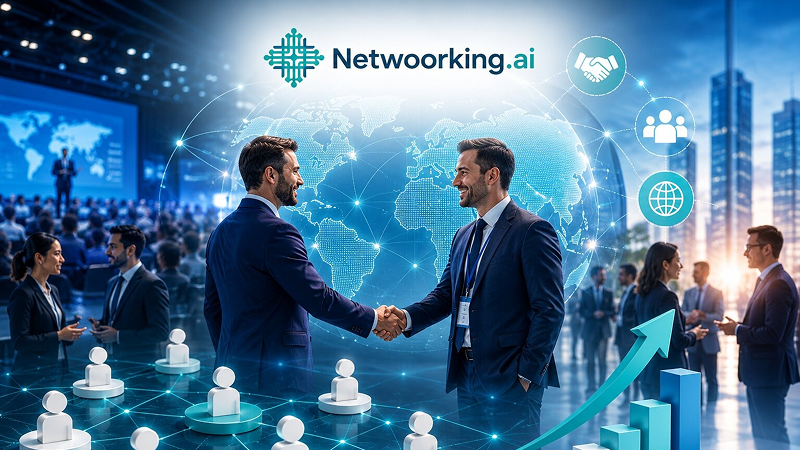
Most professionals attend conferences with the same goal – to meet people, make connections, and find opportunities. Yet after the event ends, nothing meaningful happens. Business cards get stored away, LinkedIn requests pile up, and conversations fade within a few days. A Professional Networking Platform mindset changes how you approach every interaction.
The problem is not attending the conference. It is the approach.
Networking is no longer about talking to more people. It is about talking to the right people with a clear plan, good timing, and proper follow-up. Professionals who consistently create opportunities at conferences treat networking as a system, not something that happens by chance. This guide practically explains the system so you can turn every conference into a reliable source of professional connections, business relationships, and long-term opportunities.
The Real Reasons Conference Networking Often Fails
Conferences are designed to create opportunities, but most attendees get very little value from them.
There are three main reasons for this.
1- Random Conversations
Most people talk to whoever happens to be nearby instead of identifying relevant people beforehand. This often leads to low-value conversations that do not support their career or business goals.
2- No Clear Positioning
When people cannot quickly understand who you are, what you do, or why they should remember you, the conversation loses impact.
3- No Follow-Up System
Research and industry behavior patterns show that most contacts are never followed up properly, and very few become real relationships or partnerships. This is where most networking opportunities are lost.
The result is predictable: a lot of effort during the event and very little return afterward.
The Shift from Traditional Networking to Structured Networking
Traditional networking relied on chance meetings and personality-based conversations. That approach is no longer effective in busy professional environments like conferences. Modern networking is based on purpose and timing. Instead of depending on luck, successful professionals now use a three-phase system:
Before the Conference
They identify and prioritize the people they want to meet.
During the Conference
They focus on meaningful conversations with the right people.
After the Conference
They follow a consistent process to turn contacts into professional relationships.
This structure turns networking from a social activity into a repeatable system for creating opportunities.
Phase 1: Before the Conference, Build Intent Before Interaction
Most attendees skip preparation completely, which is one of the biggest mistakes in conference networking. The quality of your network is often decided before you arrive at the event. Preparation starts with clarity. Instead of asking, “Who can I meet?” ask, “Who should I meet, and why?”
This also plays a role in Choosing Right Business Partner decisions.
Once you know the answer, you can identify the right people, including speakers, attendees, industry professionals, potential partners, and decision-makers who match your goals. At this stage, relevance is more important than numbers. Meeting five highly relevant professionals is more valuable than meeting fifty random people. Pre-conference networking can also include reaching out before the event. Many professionals connect online beforehand, making in-person conversations easier and more natural.
The goal of this phase is not to network with everyone. It is to arrive with a clear direction.
Phase 2: During the Conference, Prioritize Signal Over Noise
One of the biggest misconceptions about conference networking is that success comes from meeting as many people as possible. In reality, valuable networking is selective. Every conversation should work as a filter, not a performance. Instead of trying to impress people or constantly promote yourself, focus on finding alignment.
A strong conference conversation follows a simple structure.
Start with Context
Why are they attending the conference? What are they working on? What challenges are they trying to solve?
Move to Relevance
Do your interests or goals overlap? Is there potential for collaboration, referrals, or mutual value?
Evaluate the Next Step
Is this a conversation that should continue after the event?
This approach removes the pressure of small talk and replaces it with purpose. The best networkers are not always the most talkative people in the room. They are the people who can quickly identify meaningful conversations. Another important shift is focusing on quality instead of length.
A short, relevant conversation is often more valuable than a long discussion with no clear purpose. The goal during the conference is not to collect more connections. It is to make the right connections.
Phase 3: After the Conference, Where Real Networking Begins
Most professionals think networking ends when the event is over. In reality, this is where the real work begins. Without proper follow-up, even strong conversations lose momentum. Effective follow-up is not generic. Messages such as “Great meeting you” or “Let’s stay connected” rarely lead to results because they provide no context.
Strong follow-ups include three key elements:
Reference the Conversation
Mention something specific you discussed.
Give a Reason for Reconnecting
Explain why you are reaching out again.
Suggest a Next Step
Offer a simple action that helps continue the relationship.
This turns a passive contact into an active professional connection. The focus ultimately shifts toward Building Meaningful Connections over time. Timing also matters. Following up soon after the event improves response rates because the conversation is still fresh in their mind.
Beyond the first follow-up, relationship building continues through simple actions such as sharing useful insights, making introductions, or checking in occasionally without expecting anything in return. The goal is not immediate results. It’s long-term relevance.
What Actually Creates a Strong Professional Network
Many people think a professional network is simply a list of contacts. In reality, it is a system of relationships that are maintained over time.
Three factors determine whether your network creates opportunities.
Relevance
The people in your network are connected to your industry, goals, or interests.
Consistency
You stay in touch beyond the first interaction.
Intent
Every interaction has a purpose, even if that purpose is simply building the relationship.
When these three elements are present, networking stops being limited to events and becomes an ongoing process. At that point, conferences stop being one-time experiences and become reliable sources of opportunity.
Conference Networking Strategies That Consistently Work
Across different industries, some strategies repeatedly deliver better networking results.
Pre-Event Outreach
Reaching out before the event consistently performs better than waiting for random interactions.
Focused Conversations
Smaller, meaningful conversations often create better outcomes than large group networking sessions.
Structured Follow-Up
A clear follow-up process performs better than casual post-event messages.
Intentional Positioning
Clear and memorable introductions perform better than generic ones.
There is also a broader shift in how professionals approach networking in 2026. Instead of relying only on memory or manual tracking, many people now use systems that help organize contacts, prioritize important relationships, and maintain communication after events.
This reflects a larger change in professional behavior: networking is becoming system-driven rather than personality-driven.
Building Long-Term Professional Relationships
The real value of conferences is not the event itself. It is what happens afterward. Long-term professional relationships are built through small and consistent actions over time. These can include occasional check-ins, sharing opportunities, offering value without expecting immediate returns, and staying visible in relevant professional spaces. Strong networks are not built during a single event. They are built through repeated interactions over many touchpoints.
This is why professionals who attend conferences regularly often build stronger networks than those who attend only once. Networking is not a one-time skill. It is an ongoing system of relationship management.
Conclusion
Most people treat networking as a social activity. Professionals who consistently create opportunities treat it as a structured system. The difference is not confidence or personality. It is a process. When conferences are approached with preparation before the event, focus during the event, and consistency after the event, they stop feeling overwhelming and start becoming reliable sources of opportunity. A professional network is not something you collect. It is something you build, maintain, and strengthen over time.
Frequently Asked Questions
Q. How do i network effectively at a conference if i am naturally introverted?
Focus on deep, high-quality, one-on-one conversations rather than working the whole room. Schedule small coffee meetups in advance or use quieter venue spaces like lounge areas to build meaningful connections without feeling socially drained.
Q. What should i do if a valuable contact doesn’t reply to my initial follow-up?
Wait five to seven days, then send a polite, high-value nudge. Instead of asking if they saw your email, share a recent industry article, tool, or insight relevant to their business challenges to revive the conversation without sounding pushy.
Q. Is it appropriate to pitch my product or business during a first-time conference conversation?
No, pitching immediately ruins professional relationship building. Use your initial conversation exclusively to discover their pain points, establish your personal branding, and create enough mutual interest to secure a formal follow-up meeting later.
Q. How can i balance attending speaker sessions with maximizing networking time on the floor?
Treat session breaks, lunches, and evening receptions as your primary networking windows, and only attend presentations that directly impact your professional development. You can always download slide decks later, but you cannot recreate live human interactions.
Q. How many business cards should I bring to a modern industry event?
Bring a small backup stack of 20 physical cards, but rely primarily on digital business cards and customized QR codes or use platforms like Networking Ai. Digital tools ensure your contact details map straight into their phone instantly, eliminating the friction of manual data entry.